"The sapling vine and heroic agriculture"
On 26 November 2014 in Paris, UNESCO declared the "Agricultural practice of cultivating the sapling vine, typical of the island of Pantelleria", an intangible heritage of humanity. The recognition was approved unanimously by all UNESCO States Parties. It is the first agricultural practice in the world to have obtained this prestigious recognition.
This recognition rewarded the heroic sacrifices of the people of Pantelleria who challenge extreme environmental conditions, linked to the constant presence of winds and low rainfall, compensated by high humidity. Thanks to man's dedication, extraordinary, unique fruits are obtained. Over the generations, it has been possible to perfect practices of resistance to fatigue, care of plants, adaptation to the variety of soil, which are the strength of Pantelleria's rural culture. The same vine grown in Sicily or in other parts of Italy produces very different grapes both in flavor and consistency, all due to the combination of "land, sun, sea, climatic and environmental conditions". On the same island the product is different from district to district and from plot to plot of land. The grapes here take on unique connotations thanks to the temperature changes between day and night, thanks to the soil and the magnificent light that pervades everything.
Different peoples but the same choice of life: farmers and not sailors
The men who over the millennia arrived on this island in the center of the Mediterranean in the Strait of Sicily, Sesiotes, Phoenicians, Carthaginians, Romans, Byzantines and Arabs, Spaniards all became farmers, developing particular and unique agronomic techniques to preserve crops and allow their own survival. The vine, which has been present on the island for thousands of years, was introduced by the Arabs but not to produce wine but for drying and as table grapes.
Cultivation of sapling vines
The vine, in the shape of the Pantelleria tree, is grown in basins about 20 cm deep, useful for accumulating rainwater and protecting the bunches from the wind. The cultivation technique, introduced by the Phoenicians, is particularly complex and involves exclusively the intervention of the human hand, until the harvest which begins at the end of July. The zibibbo grapes, obtained from these vineyards, represent the raw material for the vinification of the prized Passito di Pantelleria.
Creeping olive trees as big as a house
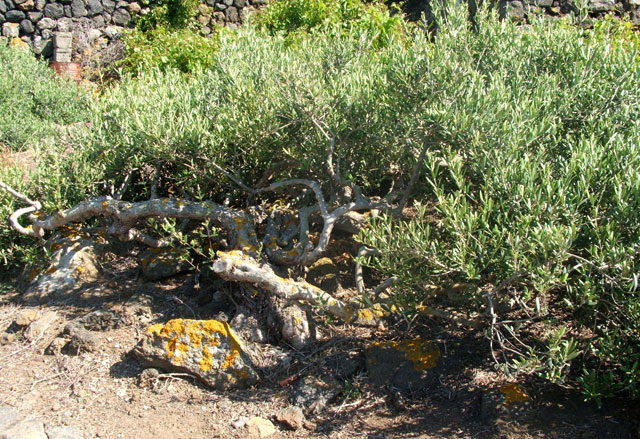
The olive trees in Pantelleria are grown in a unique way in the world, they are creeping, that is, the branches touch the ground to escape the wind that always blows in Pantelleria and as big as a house. This means that the olives cannot be harvested even with nets but one by one!
The variety of olives are the Biancolilla, which lends itself to being grown in this way, the very old Giarraffa present since the Arab period and then in the nineteenth century grafted above all to Biancolilla, the Nocellara, famous as a table olive but which guarantees an extraordinary oil and, above all, wild olive whose fruits are very small. The mixture guarantees stability to the oil.
Like the vine sapling, the olive tree is made to grow low to prevent the wind from destroying the frond. To do this, stones are "hanged" from the branches, in other words the farmers tie the branches to stones which push the branches downwards, forcing them to spread out in a creeping manner on the ground.
The capers of Pantelleria
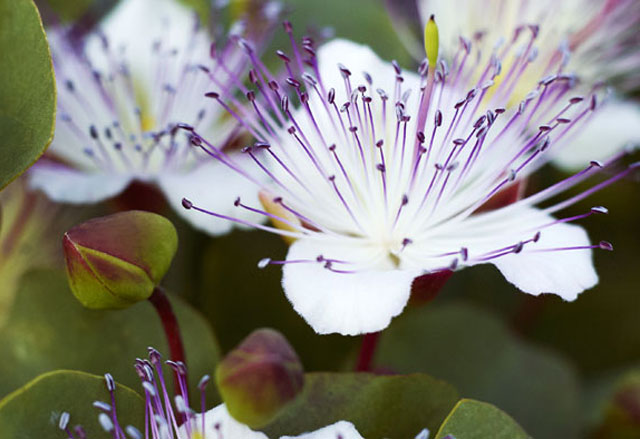
A testimony of difficult and heroic agriculture, together with the cultivation of sapling vines and creeping olive trees, is that of the Capers of Pantelleria. Known since ancient times, in fact authors such as Dioscorides and Pliny have already spoken about it, the caper has found its ideal habitat on the volcanic island in the center of the Mediterranean.
The caper plant is a small tree which, from spring to autumn, produces capers along its branches which can reach up to two meters in length. For this reason, in caper groves, lands where capers are grown, the plants are arranged at a certain distance from each other. From May to September the caper buds are harvested and, appropriately treated with sea salt, arrive on our tables.
Both the Italian Ministry of Food Resources with decree of 2 December 1993, and the European Union with EC Reg. N.1107/96, have recognized the superior quality of the Pantelleria caper with the I.G.P. .



Beautiful dammusi and apartments in Pantelleria
Location of the Resort La casa dei fiori and map
You will breathe the atmosphere of home and you will be immersed in the luxuriant nature of Pantelleria
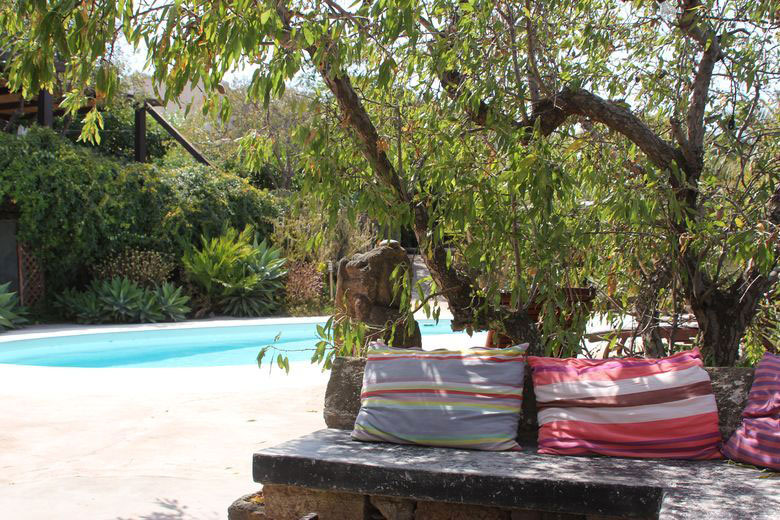
Composed of 4 independent dammusi, inserted in a charming and vast garden with swimming pool overlooking the sea, the Resort La casa dei fiori of Pantelleria is the ideal place for your holidays on the island of Pantelleria.